

The Psychology Behind Fake News: You’re Dumb, and It’s Your Fault
Look, I don’t want to be the one to break this to you, but if you’ve ever shared a piece of fake news online, congratulations—you’re officially what scientists call a gullible idiot. And if you’re thinking, That’s not me! I’m way too smart for that!—oh, buddy. That’s exactly what every single fake news spreader says right before reposting a headline that reads, “Scientists Confirm: Eating Crayons Boosts IQ!”
But don’t worry, I’m here to help. Not because I care, but because watching you people get manipulated by conspiracy theorists and basement-dwelling bloggers is like watching a cat chase a laser pointer—it’s hilarious, but at some point, it just gets sad.
So, let’s break it down. Why are you like this? And more importantly, how do you stop?‘

1. Your Brain Is Wired for Stupidity
Ever heard of cognitive biases? No? Of course not. That’s why you still believe your horoscope.
Your brain has a few built-in design flaws that make you a prime target for fake news. Here’s a quick rundown of the greatest hits:
• Confirmation Bias – You only believe things that already fit your opinions. If an article tells you something you want to be true (“Scientists say drinking beer makes you a better parent!”), you’ll believe it—facts be damned.
• Availability Heuristic – If you keep seeing something, you assume it’s true. Like how everyone thinks sharks are more dangerous than cows. Meanwhile, cows kill more people every year—but sure, keep worrying about Jaws.
• Dunning-Kruger Effect – This is my favorite. This is the one where the dumber you are, the more confident you are in your own intelligence. Looking at you, Facebook uncles who think they “did their own research.”

2. Misinformation Feels Good—That’s the Problem
You ever notice that fake news always plays into your emotions? That’s because the more angry or self-righteous a headline makes you feel, the more likely you are to share it. It’s like emotional crack.
• If you lean left: “Billionaire Pays Scientists to Poison Your Water!”
• If you lean right: “Liberals Ban Oxygen—Claim It’s a Microaggression!”
• If you’re in the middle: “Both Sides Are Equally Bad, Says Guy Who’s Never Read a Book.”
Fake news works because it doesn’t care about facts—it cares about outrage clicks. You’re not reading news, you’re just playing an extremely stupid version of Pavlov’s Dog, where instead of getting a treat, you just get angry for free.

3. How to Stop Being the Problem
Alright, let’s talk solutions. If you don’t want to be the digital village idiot anymore, here’s how you can stop spreading misinformation:

Step 1: Check the Source
If the article comes from “truthpatriotfreedom.net”, “totallyrealnews.biz,” or literally anything your Aunt Karen posted, it’s probably not credible. Actual news comes from sources with journalistic standards—not a guy with a YouTube channel filmed in his car.

Step 2: Read Past the Headline
I know, reading is hard. But it turns out, a lot of fake news headlines are designed to trick you. If you just read the first sentence and then scream about it online, you might as well be a parrot with Wi-Fi.

Step 3: Check Other Sources
If something seems shocking, Google it. If no reputable sources are reporting the same thing, congratulations—you almost fell for some Grade-A stupidity.

Step 4: Ask Yourself, “Am I Emotional Right Now?”
If an article makes you feel furious or smugly superior, that’s a red flag. Real news might be surprising, but it shouldn’t make you feel like you just won an argument with your imaginary enemies.
Step 5: Just… Shut Up for a Second
If you’re not sure something is true, don’t share it. Crazy idea, right? Imagine if everyone followed this one simple rule. The internet would be an empty, peaceful wasteland, and all the Russian bots would have to get real jobs.

Final Thoughts: The World Would Be Better If You Were Smarter
Look, we all fall for dumb things sometimes. I once thought a girl was “just going through a phase” when she called herself a witch and tried to hex my Wi-Fi. But the goal is to learn from our mistakes.
So next time you see some wild news online, take a deep breath. Think. And for the love of all things good and holy, stop letting a meme with 12 typos tell you how the world works.

Or don’t. It’s funnier for me this way.
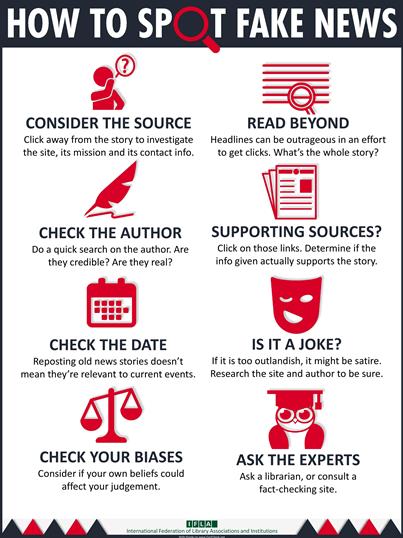
FACT CHECKING RESOURCES
Here are some of the best fact-checking resources to verify whether the news you’re reading is real or complete nonsense:
Fact-Checking Websites
• Snopes – The OG of debunking myths, fake news, and your uncle’s conspiracy theories.
• FactCheck.org – Nonpartisan, research-based fact-checking. Perfect for catching politicians in lies.
• PolitiFact – Rates political claims on their Truth-O-Meter (because “Pants on Fire” is apparently more effective than just saying “that’s a lie”).
• Reuters Fact Check – Investigative journalism meets myth-busting.
• AP Fact Check – Associated Press breaking down misinformation like it’s their job (because it is).
Reverse Image & Deepfake Checking
• Google Reverse Image Search – Drag-and-drop an image to see where else it’s been used. That “breaking news” photo might actually be from 2003.
• TinEye – Another solid reverse image search tool to track where an image originated.
• InVID & WeVerify – A tool that helps verify videos and images to catch deepfakes and visual misinformation.
Bias & Media Credibility Ratings
• AllSides – Shows the same news story from left, center, and right perspectives so you can see how reality gets twisted from each angle.
• Media Bias/Fact Check – Rates news outlets for bias, reliability, and factual accuracy.
Misinformation Detection Tools
• Hoaxy – Tracks how misinformation spreads across social media.
• NewsGuard – Browser extension that rates news sources based on journalistic standards.
Quick Tips Before You Share
✅ Check the URL – If it looks like cnn.com.co instead of cnn.com, congrats, you just fell for a scam site.
✅ Look at the Author – If their other articles include “Aliens Run the Government,” maybe don’t trust them.
✅ Google It – If only one site is reporting it, that’s a red flag. Real news spreads fast.
✅ Think Before You Share – If the headline makes you angry, it’s designed that way. Take a second to fact-check.
Now go forth and stop making the internet worse. Or don’t—just don’t complain when people start assuming your news sources include a Magic 8-Ball and a guy in a tinfoil hat.
Sincerely,
Ross Grossman, MA, LMFT
Affinity Therapy Services
http://www.affinitytherapyservices.com
Categories: Politics, psychology

 Rational Animal